
How Interior Design Drives Revenue in Restaurants
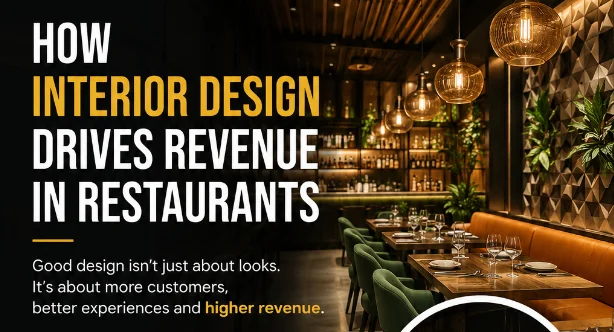
A restaurant can serve great food, but that alone doesn’t guarantee a successful business.
Before a customer tastes the first dish, they have already experienced the restaurant through its entrance, lighting, seating, colours, layout, furniture, ambience, and overall visual identity.
This is where interior design becomes more than decoration.
For restaurants, thoughtful interior design can influence customer attraction, table turnover, average spending, repeat visits, social media visibility, and brand perception—all of which can contribute to revenue growth.
1. First Impressions Can Influence Customer Decisions
A restaurant’s exterior and entrance are often the first interaction a customer has with the brand.
An attractive façade, well-designed entrance, signage, lighting, and reception area can create curiosity and encourage potential customers to walk in.
A poorly planned entrance, on the other hand, can make even a high-quality restaurant feel less inviting.
Good restaurant interior design ensures that the customer experience starts before they reach the dining table.
2. The Right Layout Can Increase Seating Efficiency
Restaurant space is valuable.
A poorly planned layout can create unused corners, uncomfortable seating arrangements, narrow pathways, and unnecessary congestion.
Professional interior planning considers:
- Table positioning
- Customer movement
- Staff circulation
- Kitchen access
- Waiting areas
- Bar placement
- Service counters
- Emergency access
The goal isn’t simply to fit more tables.
The goal is to create more usable seating without compromising customer comfort or service efficiency.
A well-planned restaurant can therefore make better use of the same physical space.
3. Ambience Can Influence How Long Customers Stay
Lighting, music, colours, furniture, materials, and spatial proportions all contribute to a restaurant’s atmosphere.
A premium fine-dining restaurant requires a very different ambience from a casual café or family restaurant.
For example:
Fine Dining:
Elegant materials, controlled lighting, refined furniture and a sophisticated atmosphere.
Café:
Comfortable seating, warm lighting, visually interesting corners and a relaxed environment.
Quick-Service Restaurant:
Efficient circulation, clear ordering areas and practical seating.
Interior design should support the restaurant’s business model and target customer, not simply follow a trend.
4. Instagrammable Spaces Can Bring Organic Marketing
Today, customers don’t just visit restaurants—they photograph them.
A distinctive wall, statement ceiling, artistic lighting installation, attractive staircase, open kitchen, or beautifully designed seating area can become a natural photo opportunity.
When customers share these spaces on Instagram, Facebook, or other platforms, the restaurant can receive additional exposure without paying for every impression.
This makes social-media-friendly design a valuable part of modern restaurant planning.
5. Interior Design Strengthens Brand Identity
Your restaurant should look like your brand.
The logo, menu, packaging, furniture, lighting, wall finishes, colours, signage, and interiors should work together to create a consistent identity.
For example, a premium restaurant shouldn’t feel visually disconnected from its branding.
A strong interior concept can communicate:
- Premium positioning
- Modernity
- Heritage
- Sustainability
- Family-friendly character
- Youthful energy
- Luxury
When customers can recognize the brand through its physical environment, the restaurant becomes more memorable.
6. Comfortable Customers Are More Likely to Return
Revenue isn’t only about attracting new customers.
Repeat customers are extremely valuable.
Comfortable seating, appropriate lighting, good acoustics, sufficient personal space, proper ventilation, and a well-planned dining environment can significantly improve the overall experience.
A customer who enjoys both the food and the environment has more reasons to return.
That’s why restaurant interior design should consider the complete customer journey—from entering the restaurant to ordering, dining, paying, and leaving.
7. Better Design Can Improve Staff Efficiency
Interior design also affects the people working behind the scenes.
A restaurant with poor circulation can create unnecessary movement for waiters and kitchen staff.
Strategic planning can improve the relationship between:
Kitchen → Service Area → Dining Area → Billing → Exit
Shorter and clearer movement paths can help staff work more efficiently while reducing unnecessary congestion.
Good design therefore benefits both customers and employees.
8. Lighting Can Transform the Dining Experience
Lighting is one of the most powerful tools in restaurant design.
The same restaurant can feel completely different depending on its lighting.
Consider:
- Ambient lighting
- Decorative lighting
- Task lighting
- Accent lighting
- Natural daylight
- Exterior lighting
Warm, layered lighting can create an intimate atmosphere, while brighter lighting may work better for casual dining or quick-service concepts.
The right lighting strategy also helps highlight architectural features, food presentation, artwork, and branded elements.
9. Design Can Help a Restaurant Stand Out in Hyderabad
Hyderabad has a highly competitive restaurant market.
From premium restaurants and cafés to themed dining spaces and cloud kitchens expanding into physical locations, businesses need more than good food to create a memorable identity.
A carefully designed restaurant can differentiate itself through:
- Unique architectural concepts
- Local cultural influences
- Contemporary interiors
- Sustainable materials
- Signature lighting
- Custom furniture
- Outdoor dining
- Landscape integration
The objective is to create an environment customers remember and want to experience again.
10. Interior Design Is an Investment in the Business
Restaurant interiors shouldn’t be treated as an expense that simply makes a space look attractive.
A successful design should support the business commercially.
It should help answer questions such as:
- Can we use the space efficiently?
- Can customers move comfortably?
- Does the design reflect our brand?
- Can the restaurant create memorable experiences?
- Is the environment suitable for our target audience?
- Can the space generate social media attention?
- Can staff operate efficiently?
When architecture, interiors, lighting, branding, and functionality work together, the restaurant becomes more than a dining space—it becomes a business asset.
Why Choose a Professional Restaurant Interior Design Team?
Restaurant projects require a balance between aesthetics, functionality, customer experience, and operational efficiency.
An experienced design team can help coordinate:
- Space planning
- Interior design
- Lighting concepts
- Material selection
- Furniture planning
- Brand integration
- Customer circulation
- Service areas
- Outdoor spaces
For larger projects, integrating architecture, interior design, site supervision, and landscape architecture under one team can create a more consistent result from concept to execution.
Conclusion
A restaurant’s interior can influence how customers perceive the brand, experience the space, share their visit, and decide whether to return.
The right design doesn’t simply make a restaurant beautiful.
It makes the space work harder for the business.
If you’re planning a new restaurant, renovating an existing property, or developing a premium hospitality project in Hyderabad, professional interior and architectural planning can help turn your space into an environment designed for both customer experience and business growth.
Ready to Design a Restaurant That Stands Out?
Our team provides architecture design, interior design, site supervision, and landscape architecture for residential and commercial projects in Hyderabad.
Book a consultation to discuss your restaurant project.